

Most beginner investors will recognize Ethereum, Cardano, or XRP as the top altcoins to invest in, while those deep into crypto would choose Hyperliquid, Chainlink, and Solana. In the long run, these are probably decent options, especially the last three.
But lesser-known projects have the potential to outperform these altcoins simply because of their lower market caps, token incentives, and products that solve problems and generate revenue.
One token that could see a massive price surge in the next bull cycle is JUP, Jupiter’s governance token.
JUP Overview
- 6.86 billion total token supply
- 3.32 billion circulating supply
- 1 billion tokens staked in the DAO
- ~20% APY for staking JUP
- 50% of Jupiter’s fee revenue goes into token buybacks
Jupiter, the biggest planet in crypto
Crypto traders and investors who have interacted with the Solana blockchain, whether trading meme coins during the 2024 mania or buying tokenized stocks during the 2025-2026 TradFi bull run, have undoubtedly encountered Jupiter.
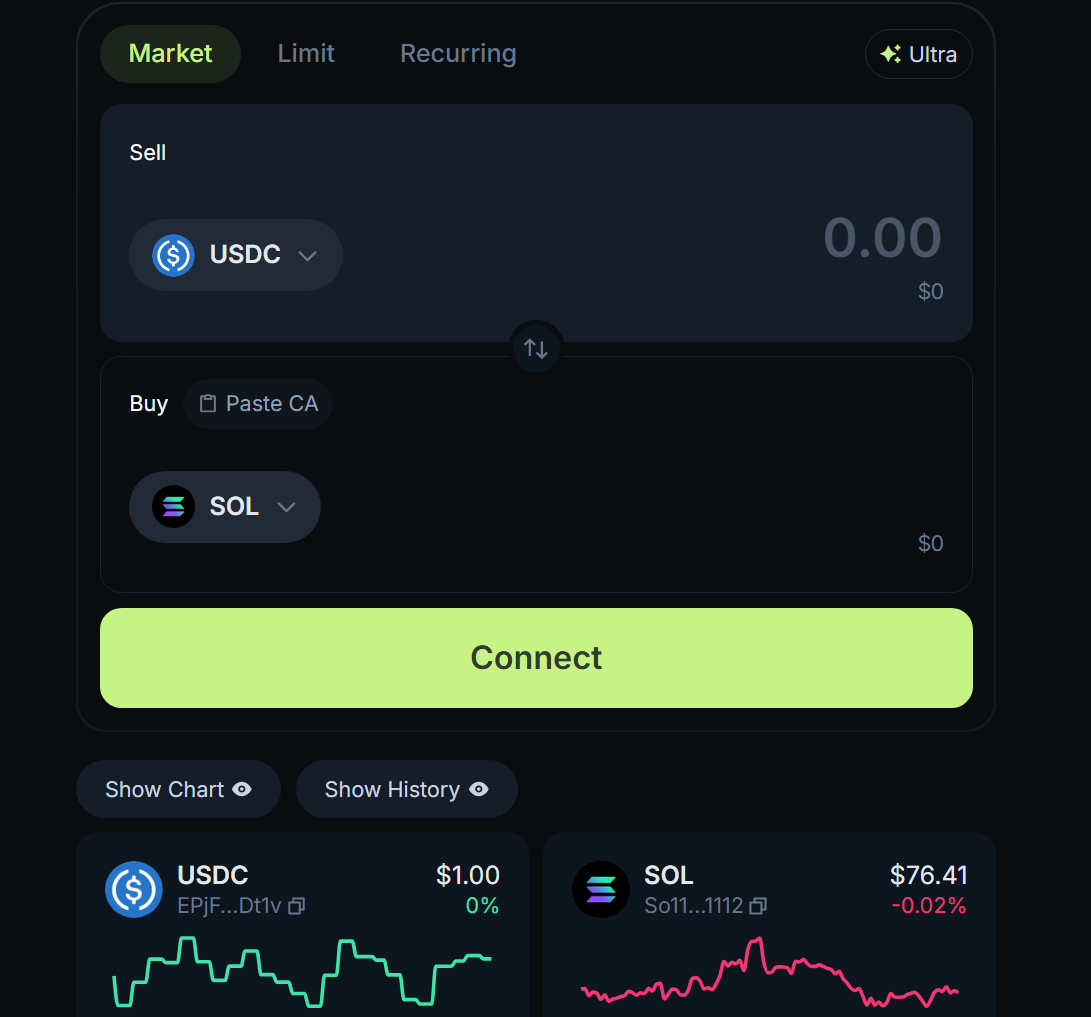
What started as a simple aggregator on Solana in October 2021 has grown into one of the largest crypto projects, with multiple revenue verticals, generating over $1 billion in cumulative fees and over $350 million in cumulative revenue, according to DefiLlama.
Most crypto projects would pocket the revenue. But Jupiter didn’t. Since February 2025, JUP has been a major beneficiary, with 50% of fee revenue used to buy back the token and remove it from circulation. Over 300 million tokens have been bought so far, with half burned.
Looking at the JUP price chart, however, it seems the buybacks didn’t have any impact on the price, as it continued to drop from $0.87 when the buybacks started to an all-time low of $0.13. The reason for that was high inflation.
Within one year of the buyback program’s start, almost 60% more JUP tokens had been unlocked. The amount of buybacks simply couldn’t absorb the influx of new tokens during a bear market.
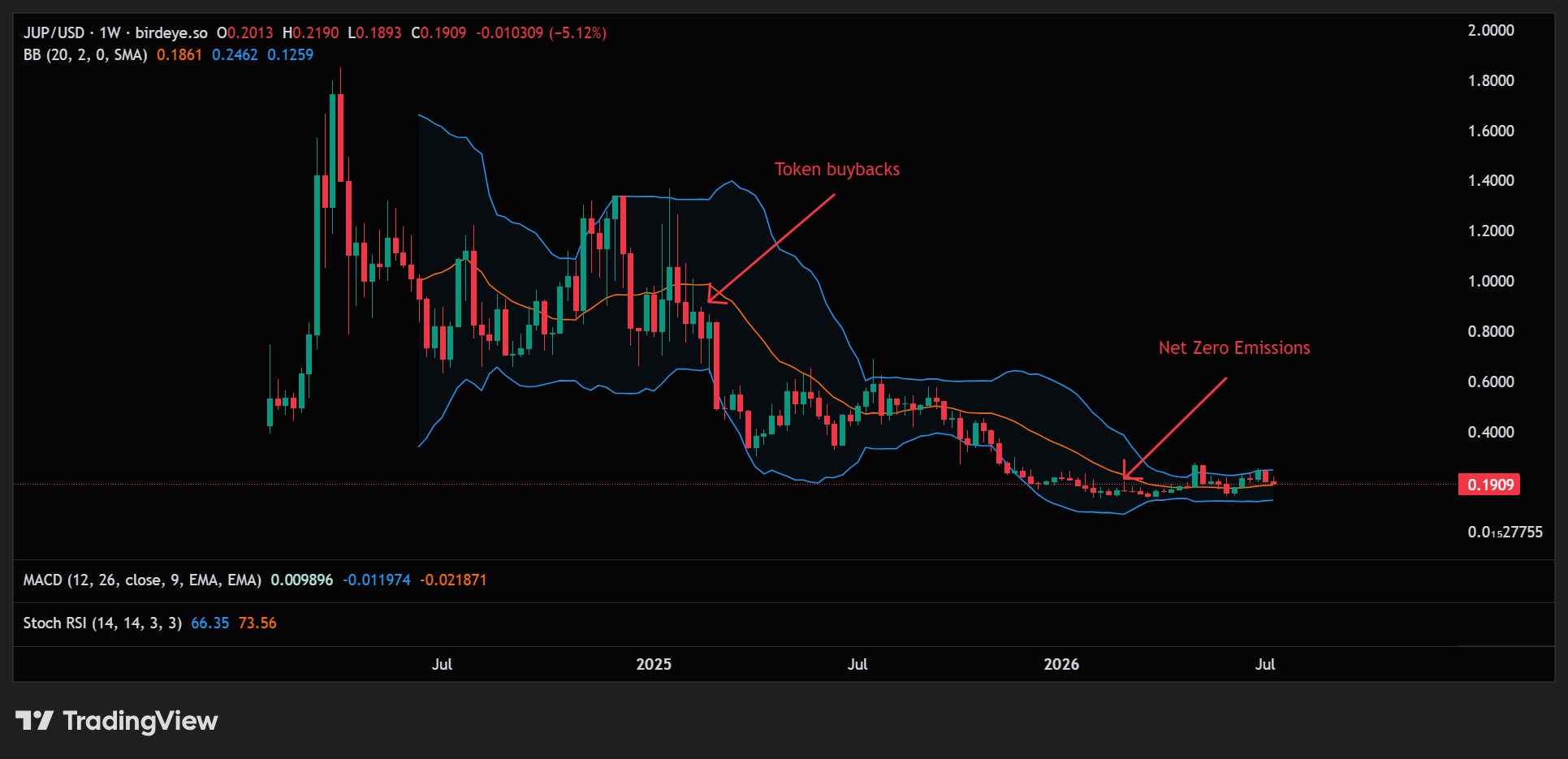
One benefit of being a JUP token holder is the ability to participate in the project’s governance by voting in the DAO. In February 2026, token holders who had locked their JUP voted overwhelmingly in favor of net-zero emissions. Here’s what that means:
- Jupuary snapshot taken, but airdrop postponed to a future date
- Team tokens remained locked indefinitely
- Mercurial unlocks offset by Jupiter’s directly buying these tokens
Since the vote passed and emissions stopped, JUP stabilized between $0.19 and $0.25, creating a floor that makes buying the token logical for long-term investors at this point.
But for Jupiter to buy back more tokens and push the token price higher, the platform needs to increase its revenue. Fortunately, Jupiter is one of the few crypto projects that have consistently shipped new products.
Recently, it launched Jupiter Gacha (powered by Collector Crypt), and in less than a week, over $10 million in Pokémon cards were bought and opened. Before that, Jupiter integrated Polymarket, the largest prediction market, into Solana, enabling users to bet on various events and unlocking another revenue stream.
The biggest bet, however, goes into a project that could revolutionize how investors and traders interact with the blockchain.
Global Unified Market
A major issue that has long plagued the crypto space is fragmentation. There are simply too many blockchains that don’t interact well with each other. Investors who want to swap their tokens on the Solana blockchain for tokens on Ethereum will have to either go through a centralized exchange like Kraken or Coinbase and pass an ID verification procedure, or trade wrapped versions of the tokens, which are not always available.
Either option requires financial gymnastics and higher-than-necessary fees, resulting in a poor user experience.
Jupiter has been building their magnum opus, the solution, in silence for the past couple of years. Today, the Global Unified Market (GUM) is in mainnet beta and available for anyone to try. Users can trade crypto seamlessly across multiple blockchains, earn passive income with various yield farming strategies, or trade perps in a completely decentralized and anonymous way.
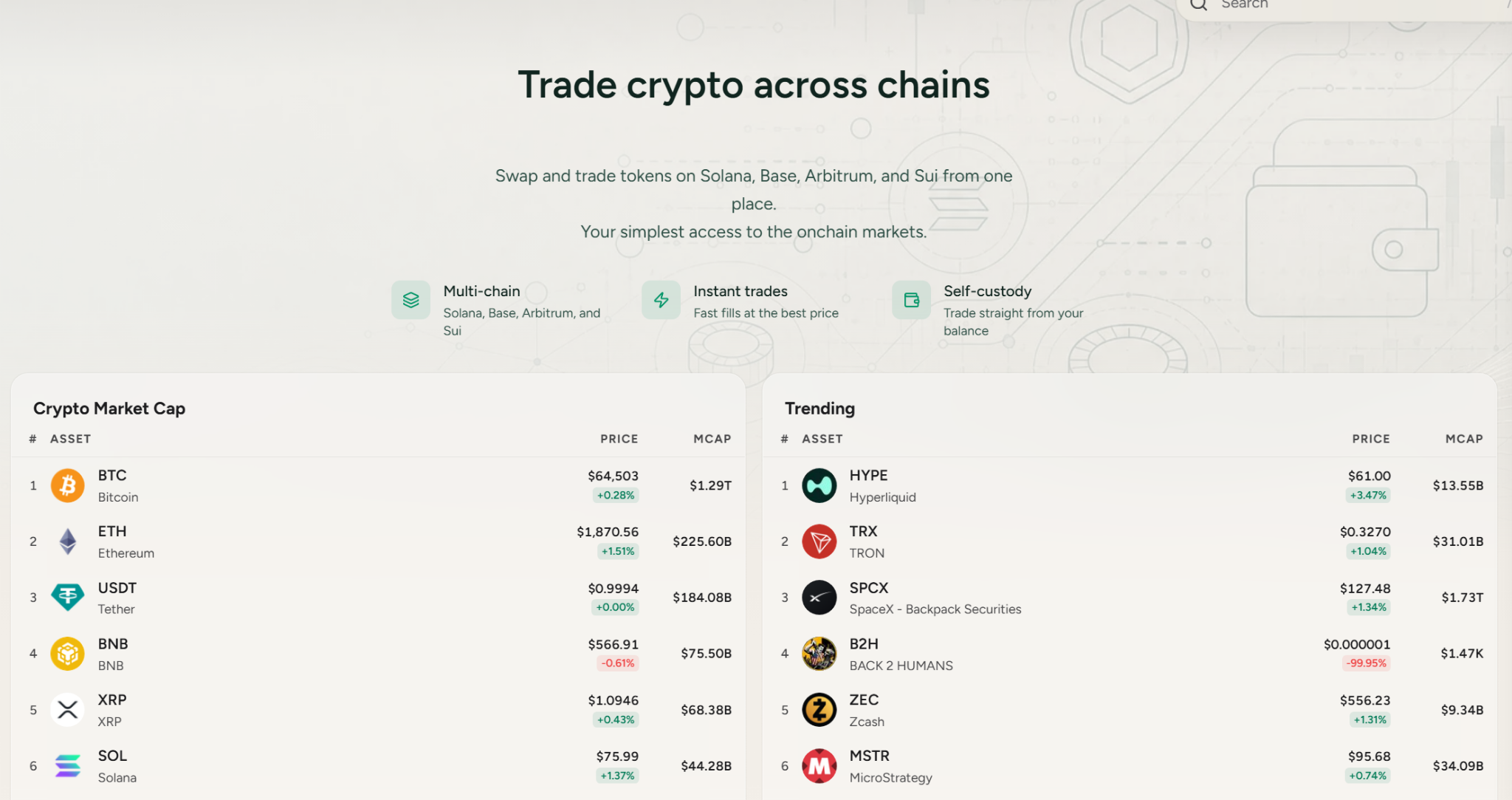
The GUM App lets users access the GUM stack without revealing their identities or having to keep track of seed phrases. The App accepts crypto wallet logins, passkeys, and email addresses. Deposits and withdrawals are made through supported chains without bridging or token claiming, further simplifying access.
Once logged in, users can trade supported assets across multiple chains in one place. Tokenized stocks are also available via xStocks. Professional traders can access orderbook-style perpetual futures with up to 20x leverage, while yield farmers can access passive income strategies via stablecoins and liquid staking tokens.
Granted, GUM is in beta right now. But once it fully launches, it will support a larger number of assets and blockchains, and potentially new features as well.
Multiple revenue verticals
Jupiter’s swap aggregator remains central to Jupiter and is the second-largest revenue contributor after the perps. But the aggregator has improved significantly over the years.
At the time of writing, Jupiter uses Metis V8, the top router with over $2 trillion in lifetime volume. Its main feature is that the executed price is as close as possible to the quoted price you see on your screen. No other competitor comes even close.
Other Jupiter revenue streams include:
- Lend. Jupiter Lend boasts over $2 billion in supplied value across tokens and tokenized stocks. Users can deposit one token, for example, SOL, as collateral to earn APY and borrow another, say USDC. Users can also take advantage of looping and leveraged strategies to boost their passive yield.
- Prediction. In partnership with Polymarket, users on Solana can predict various events without bridging to Polygon.
- DCA. Dollar-cost averaging is a popular investment strategy in both crypto and TradFi. Jupiter has made it even more rewarding by adding 4.5% APY while you wait for your DCA to hit. For example, you allocate $10,000 to a DCA and spend $100 per day buying the token you want. Your unused funds accrue 4.5% APY.
- Limit. Limit orders are best for investors who want to buy a token at a specific price. If the limit order isn’t reached, the transaction won’t execute. To add another twist, Jupiter has integrated trailing stop-loss for Limit orders, so you never round-trip your bags again.
- Offerbook. This product allows users to deposit any token as collateral and borrow USDC against it. Users set the loan term and APY, making this a useful tool for those who need liquid funds immediately but don’t want to sell their tokens.
Jupiter Wallet and Card
Jupiter also offers a crypto wallet available as a browser extension and a mobile app. Almost everything available in the Jupiter ecosystem is available within the wallet app, including Limit, DCA, perps, predict, earn, and more.
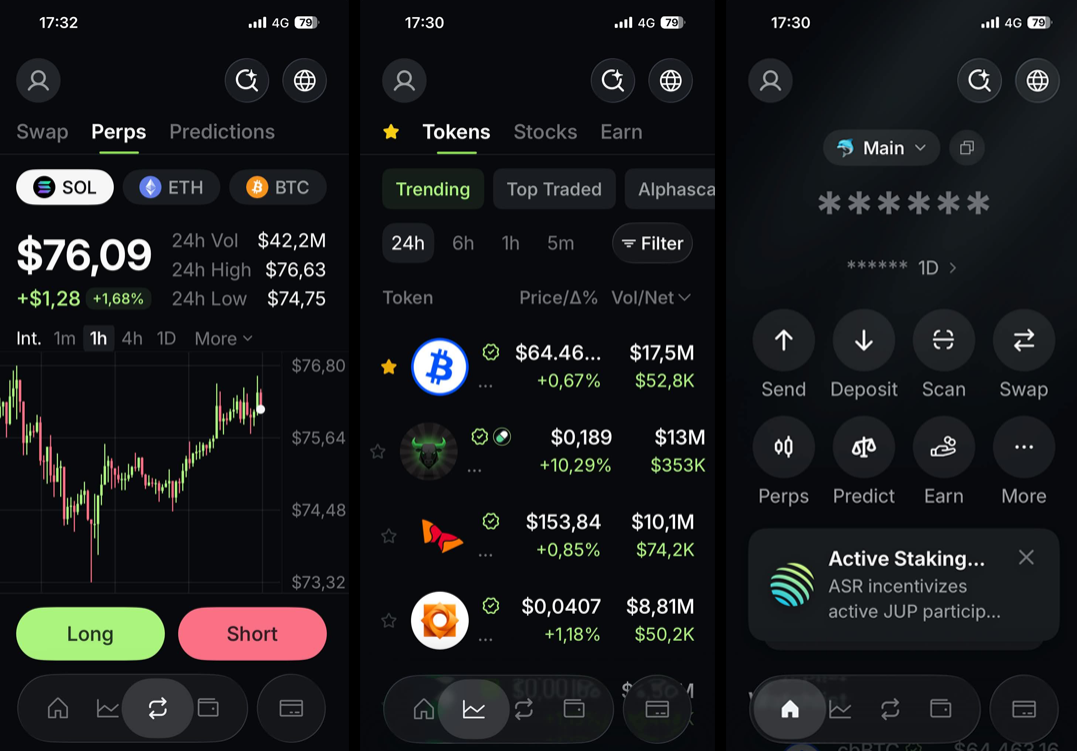
While crypto onboarding is seamless and you can buy any token you want directly within the Jupiter wallet using a card, Jupiter offers equally seamless offboarding with its own virtual Visa Card.
The Card is fully integrated within the wallet and allows users to spend their wallet balance wherever Visa is accepted. You only pay 1-1.8% foreign transaction fees. There are no annual fees or other hidden fees. On top of that, there are cashback rewards.
JUP risks
Jupiter is a solid crypto project with multiple revenue verticals and products that solve user issues. But that doesn’t guarantee the trend will continue. Granted, Jupiter’s swap aggregator dominates the Solana blockchain, and no competitor is even close to replicating its transaction precision, but there are strong competitors on other fronts.
Perps is Jupiter’s biggest revenue contributor, and it’s eclipsed by Hyperliquid. The latter saw $633 billion in trading volume in Q1 2026 and is one of the top three crypto protocols by revenue. Other competitors are emerging daily. Phoenix Trade, a perps trading platform, and JTX (from the creators of Jito), a spot trading platform, are already launching strong products that could take market share from Jupiter.
Regulatory and adoption risks are also present. Despite positive moves in the regulatory department, things can change and could negatively affect Jupiter. As for adoption, Jupiter already boasts a strong community that supports the project. But whether that’s enough when projects like GUM leave beta remains to be seen.
Final thoughts
Jupiter is the leading Solana swap aggregator, aiming to become the ultimate trading and portfolio app through its Global Unified Market product. With cumulative revenue of over $350 million, it is one of the rare crypto projects that generates revenue. On top of that, 50% of fee revenue goes to JUP buybacks, giving the token constant buy-side pressure.
During the bear market, JUP traded between $0.19 and $0.25, while top altcoins dropped by double digits. When the bull kicks in, Jupiter’s revenue should increase, further boosting the token price. But even if the new bull run is different from the others, with liquidity moving to opening Gacha packs, predicting future events, or simply trading perps, Jupiter is well positioned to take advantage of that.
As with any crypto investment, there are risks, so never invest more than you can afford to lose.
Disclosure: This article is for informational purposes only and does not constitute financial advice.